
-
- Notice
- No new notifications
-
- Messages
- See all notifications
-
18
- The cart
In the basket 0
in the amount of 0 RUB
- Go to basket
Vegetable seeds Flower seeds Grapes (plants) Mushrooms Agrochemicals
|
|
|
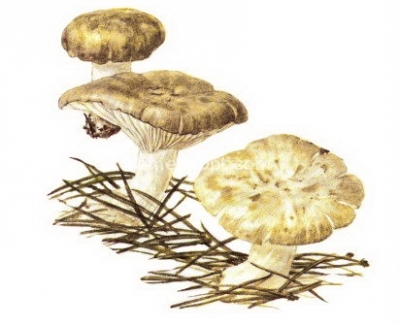
Hygrophorus March occurred in various parts of Central Europe, North America and NorthAfrica . It grows from March to June, and in Southern Europe since January . This type is characteristic of natural regrowth mountain coniferous forests . Sometimes it occurs and below, often on calcareous soils, creates mycorrhiza with firs and pines, and in Morocco, for example, under the cedar trees growing at an altitude of almost 2 thousand . meters above sea level . fruiting bodieslong remain hidden under the pine needles, sometimes appearing even under the melting snow, but it is enough to find one to immediately find the next and many others . Hygrophorus March is very similar to Hygrophorus goat (H . camarophyllus), who sometimes find it " autumn form . "But at the time, as Hygrophorus March has arched bonnet from almost whiteto steel-gray and grayish curved leg, Hygrophorus goat different shade of brown cap and stem and radial fibrous cap . In Europe, this fungus grows only in the autumn, and in North America - from the beginning of spring . Hygrophorus Russula (H . Russula) is as Hygrophorus March, a rare fungus . It can be found in the autumn,sometimes in December, especially in the south of Europe . For his height he needs a calcareous soil, leafy surroundings and warm . Most often, it creates a mycorrhiza with oak . All of the above types of mushrooms are edible and quite tasty . On the territory of the USSR among Hygrophorus considered edible only Hygrophorus brown or late H . Hypothejus . hasbend, dry, with a waxy bloom hat diameter 5 - 10 cm from whitish to gray and dark steel-gray . Short cascading to the leg plaques have a whitish color, they subsequently become gray . 5 feet Dimensions in 8 / 0.6 - 2.5 cm, strongly curved, silky fibrous and whitish, with age - with a touch of gray . Fleshwhite, old age - a little silver . Spore print white . Spores colorless, 7-9 / 4 - 5 pm . Cap 4 - 10 cm in diameter, strongly fleshy, convex - or pincushion-prostrate, sometimes asymmetric, white, later gray to brownish - or blackish-series, dry, naked, with a lowered, uneven, often wavy edge . platesrare, narrow, slightly down on the leg, white, later gray . white pustules . Disputes 7- 9 x 4 -5 (6) um, smooth . Leg 3 - 6 (8) X 0.5 -2.5 (4) See, dense, often with the channel later, white, over time, grayish, powdery top, below the fiber . flesh is firm, white when cut, turn gray with age, with a pleasant smell . Distributed throughout Ukraine . It grows in coniferous and deciduous, mostly mountain forests, early spring . Edible mushroom high quality . Use fresh .
| SPECIFICATIONS | |
|---|---|
| Bag | |
| Form dispute | ovoid-ellipsoid |
| The size of the dispute | 7 to 9 x 4 -5 (6) mm |
| Disputes | smooth, colorless |
| Description | |
| Name in latin | Hygrophorus marzuolus (FR . ) Bres . |
| Rod | Hygrophorus |
| Storage | use fresh |
| Features | appears in early spring when other edible fungi still little. In progress mainly in soups, as well as a side dish meat dishes |
| Fruiting bodies are formed (grows) | early spring, from March to June, and in Southern Europe since January |
| Class | Agaricomycetes |
| It is possible to confuse the signs and insignia | due to the very early season appearance Hygrophorus early can not be confused with other fungi, including - with poisonous |
| Edible | edible mushroom high quality |
| Distribution | all over Ukraine, in different parts of Central Europe, North Americaand North Africa |
| Related species | Hygrophorus March is very similar to Hygrophorus goat (H . camarophyllus), which is sometimes considered his "autumn form . " |
| Taste | expressed no taste |
| Grow | in coniferous and deciduous, mostly mountain forests |
| Smell | with a pleasant smell |
| Fruiting body (Cap) | |
| Inside | dense, fleshy |
| Surface | dry, bare,with lowered, uneven, often wavy edge |
| Color | white, later gray to brownish - or blackish-series |
| Diameter | 4 - 10 cm |
| Form | convex - or pincushion-rozprostertaya, sometimes asymmetric |
| Features | creates mycorrhiza with firs and pines, and in Morocco, for example, under the cedar trees growing at an altitude of almost 2 thousand . meters above sea level |
| Plant | |
| Flesh | thick, white when cut, turn gray with age, with a pleasant smell |
| Plates | rare, narrow, slightly down on the leg, white, later gray |
| Features | white pustules |
| Features | records of young mushrooms whitish , in mature - grayish |
| Stipe | |
| Diameter | 0, 5 -2, 5 (4) cm |
| Length | 3 - 6 (8) cm |
| Color | white, over time, grayish, powdery top, lower fiber |
| Features | dense, often with the channel later |
Enter your information
To recover the password
Forgot password? Enter your e-mail
Registration for new users
Enter your details: